
Magnaflux Process Explained: Key Insights & Use Cases
Aug 14th 2025
Learn everything you need to know about the magnaflux process from the experts at SkyGeek. Understand how the magnafluxing process works, its key applications, and the benefits of this widely used non-destructive testing technique.
Magnafluxing is a non-destructive testing (NDT) technique that is commonly used in various industries, including but not limited to: automotive, aerospace and manufacturing. Magnafluxing is often used to detect surface and subsurface defects in ferromagnetic materials. The process involves executing a series of steps that disperse iron oxide particles across a magnetic field, highlighting leaks and other defects. This article provides a comprehensive overview of the magnafluxing process, its applications and its benefits.
What Is Magnafluxing?
The magnaflux process, also known as magnetic particle inspection (MPI), is a type of non-destructive testing (NDT) that uses magnetic fields and iron oxide particles to detect cracks, porosity, laps, seams, and other surface and subsurface defects in ferromagnetic materials. Ferromagnetic materials are those that contain iron, nickel, or cobalt, and can be magnetized. It’s important to note that the magnaflux process only works on materials that can be magnetized.
The magnafluxing process involves the following steps:
- Cleaning the surface of the material to be inspected to remove any dirt, oil or other contaminants. Contamination could impede the magnafluxing process.
- Applying a magnetic field to the material by passing an electric current through it or by using a permanent magnet.
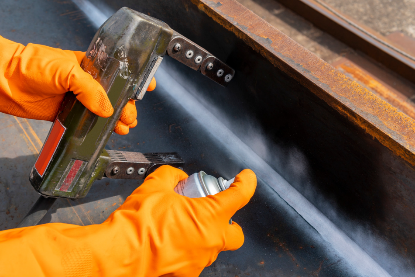
- Spraying iron oxide particles (magnetic particles) onto the surface of the material, which are attracted to any areas of magnetic flux leakage caused by surface or subsurface defects.
- Inspecting the surface of the material under ultraviolet (UV) light to reveal any indications of defects.
There are two main types of magnetic particles used: dry and wet. Dry particles are often used in field inspections, while wet particles suspended in a carrier fluid offer better mobility and are ideal for lab environments. Fluorescent particles used with UV lighting allow technicians to identify even fine cracks with high precision.
If you've ever searched for "what is magnaflux" or "magnaflux testing near me," this process is exactly what you're looking for. It's an industry-trusted method for flaw detection that's reliable and repeatable.
Applications of Magnafluxing
Magnafluxing is most commonly used in manufacturing and automotive industries. It is done during the inspection process and can be used to detect leaks, cracks or surface imperfections. Magnafluxing is commonly used in various industries to inspect critical components such as engine blocks, gears, shafts, pipelines and welds. Some of the applications of magnafluxing include:
- Automotive Industry: Magnafluxing is used to inspect engine blocks, cylinder heads and other critical components for defects that may lead to engine failure. Engine block magnaflux procedures ensure internal defects are not missed.
- Aerospace Industry: Magnafluxing is used to inspect aircraft engines, landing gears and other critical components for defects that may compromise safety.
- Manufacturing Industry: Magnafluxing is used to inspect welds, castings and forgings for defects that may affect the quality and performance of the final product.
- Railroad and Heavy Equipment Industries: These sectors also use magnafluxing to inspect axles, wheels and suspension parts that experience heavy loads and stress. Early detection of faults ensures better safety and reduces downtime.
For aviation and performance mechanics, the ability to magnaflux engine block surfaces ensures reliability and can prevent future failures. A properly executed magnaflux test may be the difference between preventative maintenance today and a major overhaul down the road.
In the aerospace industry, the magnaflux process is often used alongside specialized products like Magnaflux’s 14A magnetic powder and Carrier II suspension fluid for magnetic particle inspection, as well as ZL-60D and ZL-67 for liquid penetrant testing. These tools are critical in inspecting turbine blades, landing gear components, and engine parts—ensuring reliability and flight safety through consistent, non-destructive flaw detection.
These industry-grade tools support the magnaflux testing process for aerospace professionals seeking dependable inspection outcomes.
Benefits of Magnafluxing
There are many benefits of using magnafluxing versus other inspection techniques. When inspecting engine parts or storage tanks, for example, a non-damaging inspection technique may be important. Cost is another factor that's also taken into consideration as well as reliability. Magnafluxing is considered superior to many other NDT techniques because it offers several benefits, including:
- Non-Destructive Testing: Magnafluxing is a non-destructive testing technique that does not damage the material being inspected.
- Cost-Effective: Magnafluxing is a relatively low-cost method of detecting surface and subsurface defects compared to other NDT methods.
- High Sensitivity: Magnafluxing can detect very small surface and subsurface defects that may not be visible to the naked eye. Even small imperfections that other testing methods may miss are detected.
- Fast and Reliable: Magnafluxing can be performed quickly and provides reliable results.
- Versatile: The technique can be used on a wide range of part sizes and shapes, making it ideal for everything from small bolts to large structural components. With portable equipment available, inspections can be conducted in the field, on the shop floor or wherever it's convenient.
Whether you're using fluorescent powder or a black-and-white contrast method, options like magnaflux dye penetrant and magnetic crack detector kits from SkyGeek give professionals flexible ways to inspect metal parts without breaking the bank.
Safety Best Practices for the Magnaflux Process
When conducting the magnaflux testing process, it’s essential to follow key safety protocols. Always wear appropriate PPE including gloves and eye protection, especially when using UV light or handling fluorescent particles. Ensure proper ventilation when working with aerosol-based products, and verify that all electrical equipment is grounded to avoid shock during magnetization. These precautions ensure accurate results while protecting technicians and their workspaces.
Advancements and Best Practices in the Magnaflux Testing Process
For accurate and repeatable results, the magnaflux testing process must be supported by strict safety protocols and regular equipment maintenance. Technicians should wear appropriate PPE, ensure ventilation when using aerosol carriers, and follow both manufacturer and regulatory guidelines to prevent hazards during inspection.
Equally important is the calibration of magnaflux testing equipment. This includes regular cleaning, component verification, and functional testing to ensure consistent magnetic field strength and particle visibility. Neglecting maintenance can lead to false readings and compromised safety.
In recent years, technological advancements have transformed the magnaflux process. Automated inspection tools, digital imaging, and improved lighting systems have increased the speed and accuracy of flaw detection. As industries raise their quality and safety expectations, the role of advanced magnaflux solutions continues to grow—making ongoing training and modernization essential for professionals in aerospace, manufacturing, and beyond.
Conclusion
The magnaflux process is an essential NDT technique that is widely used in various industries to detect surface and subsurface defects in ferromagnetic materials. The process is cost-effective, non-destructive, and provides reliable results. By understanding the magnaflux process and its applications, you can make informed decisions about when and where to use this valuable NDT technique.
Magnafluxing is a smart investment in quality control, safety and long-term performance. When done correctly, magnafluxing helps eliminate guesswork, delivering clear, visible results that empower mechanics, technicians and engineers to act decisively.
No matter how you refer to it, the magnaflux method remains a cornerstone of industrial inspection standards. For more information, or to shop for magnaflux heads, powders, yokes or complete kits, visit SkyGeek to browse professional tools used by mechanics and inspectors worldwide.