
How to Choose the Right Aerospace Adhesives for OEM and MRO Applications
May 28th 2026
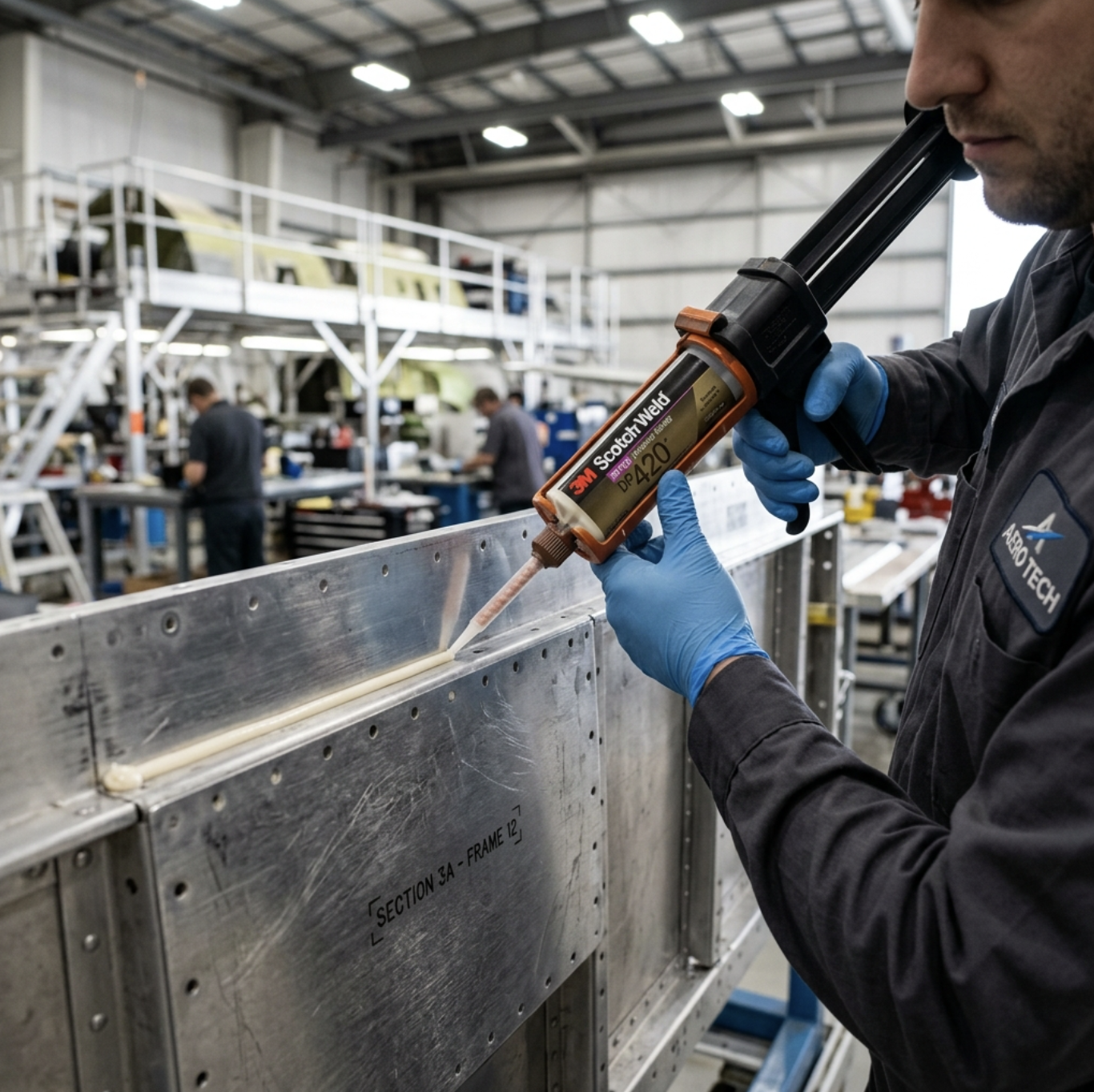
Adhesive selection is one of the most consequential purchasing decisions in aviation, and one of the most frequently under-researched. Most failures in bonded aircraft structures do not trace back to a defective product. They trace back to the wrong product selected for the application, a specification missed in the work order, or a handling requirement that was not followed because nobody flagged it at the point of purchase.
SkyGeek has supplied adhesives and bonding systems to MRO facilities, airlines, military depots, and OEM production programs for more than 40 years. The pattern we see repeatedly: buyers know the product name but not the qualification status required by their specific work order, or they source a structural epoxy without confirming whether the cure conditions match what is achievable in their shop or on the aircraft.
This guide covers the adhesive types used across OEM and MRO contexts, what distinguishes them, and the specification and handling factors that determine whether a bonded assembly performs as intended. If you are sourcing adhesives for a specific repair or production program, the selection criteria below will help you ask the right questions before the order is placed.
Why Adhesive Selection Differs Between OEM and MRO
The same product family, say a two-part structural epoxy, may appear in both an OEM factory and an MRO hangar. The selection criteria diverge considerably once you look past the chemistry.
In OEM manufacturing, engineers specify adhesives as part of a controlled bonding system. Surface preparation, primer selection, mixing ratios, application method, and cure cycle are all defined in process documentation. Adhesive substitution typically requires an engineering change order and re-qualification testing. Traceability from batch number to airframe is standard.
In MRO operations, technicians work from approved maintenance manuals, structural repair manuals (SRMs), or repair engineering orders. The adhesive specified in the SRM may be called out by trade name, MMM-A specification, or approved alternate list. Field conditions, temperature, humidity, cure time constraints, and limited mixing equipment, all influence which product is practical for a given repair.
Understanding which context you are purchasing for determines nearly every downstream decision: product type, packaging format, pot life, cure requirements, and documentation needs.
Structural Epoxy Adhesives: The Workhorses of Aerospace Bonding
Two-part structural epoxy adhesives are the most broadly used bonding systems in aerospace, spanning metal-to-metal bonding, composite repair, honeycomb panel edge fill, and component assembly.
The most widely recognized in commercial aviation is Henkel Loctite EA-9309.3NA, which meets MMM-A-132 and is called out by name across numerous SRMs for structural repair of aluminum and composite structures. Its paste consistency allows gap-filling on repair surfaces that may not be perfectly matched, and its room-temperature cure profile makes it practical under standard hangar conditions.
Henkel Loctite EA-9354 offers higher shear strength for more demanding structural bonding requirements and is used in both repair and production applications. Magnobond 6398 is another two-part epoxy system with broad aerospace application, particularly in structural bonding where high strength and chemical resistance are required.
Key Selection Factors for Structural Epoxies
When evaluating a structural epoxy for a specific application, these are the critical parameters:
- Lap shear strength: The primary measure of structural bond performance. Confirm against the joint load requirement in the repair documentation.
- Operating temperature range: Bonded joints in engine nacelle areas, wheel wells, and control surfaces see temperature extremes. Confirm the adhesive maintains performance across the required range.
- Pot life: Working time after mixing. Critical for large repair areas or complex assembly sequences where partial cure before joint closure would compromise strength.
- Mix ratio and format: Pre-measured two-part cartridge systems reduce the risk of ratio errors in the field. Bulk packaging is more practical for production operations with metered dispensing equipment.
- Specification compliance: Confirm the product meets the specification called out in the work order (MMM-A-132, AMS, or OEM approval list) before ordering.
For OEM applications, also verify whether the adhesive is listed on the applicable OEM approved products list (APL) or process specification. Generic MIL-SPEC compliance alone may not satisfy a specific production program requirement.
Film Adhesives: Precision Bonding for Composite Structures
Film adhesives, supported or unsupported epoxy films stored frozen until use, are standard in aerospace OEM composite panel and honeycomb sandwich structure bonding. They provide consistent bondline thickness, even adhesive distribution, and reliable performance across large bonded areas.
Film adhesives are widely specified for:
- Primary and secondary structural composite panel bonding in airframe manufacturing
- Honeycomb core bonding in floor panels, fairings, and control surfaces
- Repair bonding programs where the SRM calls out a film system for structural restoration of composite structure
Handling requirements are non-negotiable. Film adhesives require frozen storage (typically -18°C or below), controlled thaw procedures before use, and strict tracking of out-time, the cumulative time the material has spent outside frozen storage. Exceeding allowable out-time before cure compromises adhesive properties and is a common source of bond quality escapes.
For MRO shops incorporating film adhesive repairs, verifying that receiving, storage, and out-time tracking procedures are in place before the first repair is as important as selecting the correct product.
Paste Adhesives and Fairing Compounds: Surface Repair and Restoration
Trowelable paste adhesives and fairing compounds fill a specific gap in the MRO toolkit: repairing surface damage, filling voids in honeycomb edges, restoring aerodynamic contour after impact damage, and preparing surfaces for topcoat application.
These products are not typically structural in function. Their primary requirements are adhesion to the substrate, sandability after cure, compatibility with topcoat systems, and workable consistency for manual application. Paste adhesive systems used in aerospace surface repair should always be specified against the repair documentation. Using a non-approved filler or fairing compound on an aerodynamic surface can create inspection and compliance issues at the next maintenance event.
Silicone Adhesive Sealants: Flexible Bonding and Environmental Sealing
Silicone adhesive sealants serve a different function than structural epoxies. They are specified where the joint requires flexibility, vibration damping, electrical component potting, or environmental sealing rather than high structural strength.
Wacker Elastosil E43 and Dapco 3300 are two products frequently encountered in commercial aviation MRO for silicone adhesive applications. Both offer good adhesion to a range of aerospace substrates, remain flexible after cure, and are suited to applications where thermal cycling would crack a rigid adhesive system.
Silicone adhesive systems are commonly used for:
- Sealing electrical connectors, wire bundle penetrations, and access panel edges
- Potting and encapsulating avionics components where vibration damping is needed
- Bonding flexible components where differential thermal expansion would stress a rigid bond
- Environmental sealing of non-structural joints and closures
For a side-by-side comparison of adhesive chemistries, see our guide to aerospace adhesives: epoxy, cyanoacrylate, polyurethane, and silicone.
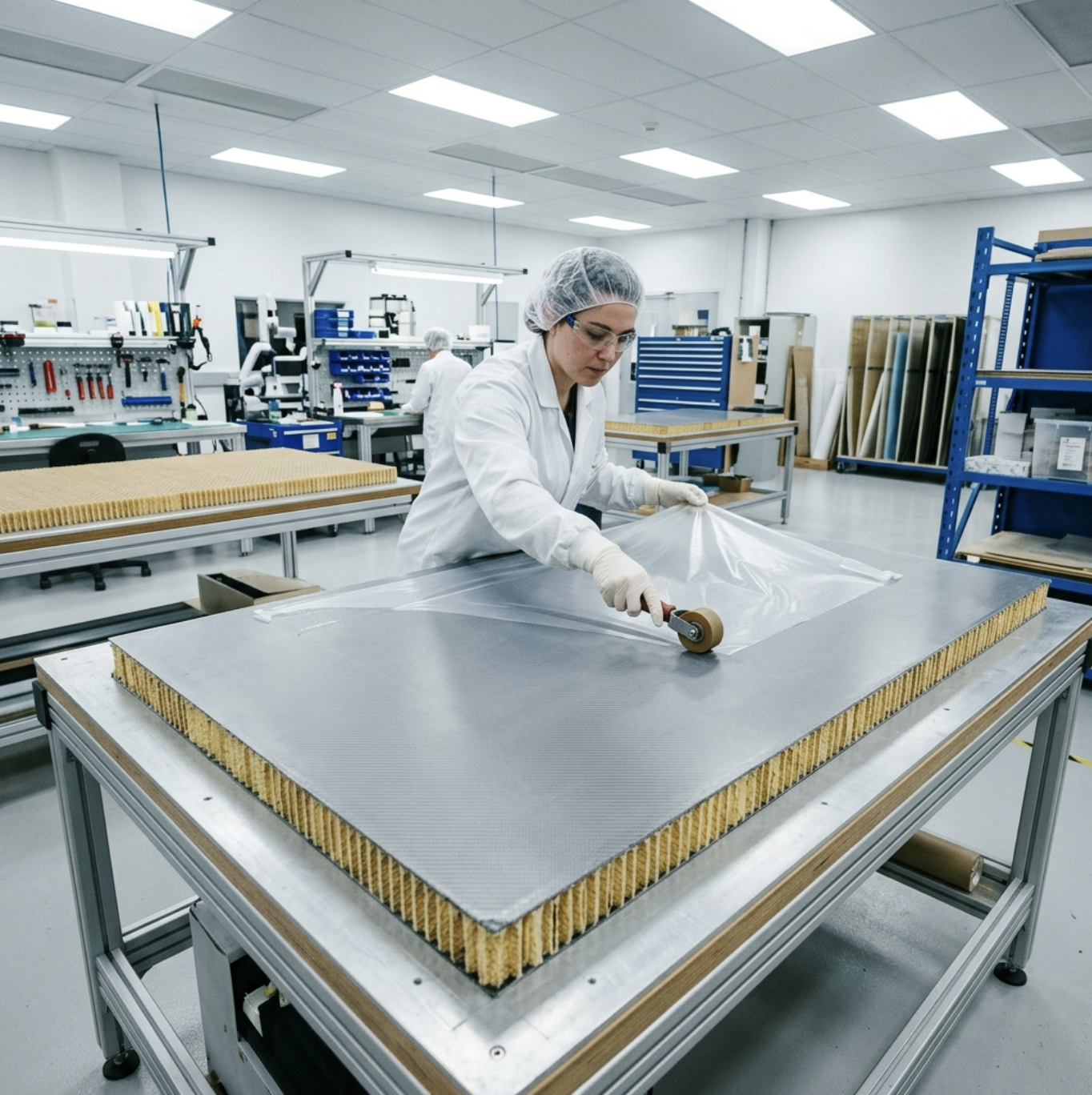
Alt: Technician laying film adhesive onto a composite honeycomb sandwich panel in an aerospace OEM manufacturing facility
OEM Adhesive Systems: Thinking Beyond the Adhesive Alone
In production programs, the adhesive is one component of a bonding system. Surface preparation, primer, adhesive, and cure cycle are specified together. Each step affects the performance of the next, and skipping or substituting any element without engineering authorization risks bond integrity and qualification status.
The most common failure mode in bonded aerospace structures is not adhesive failure within the adhesive layer. It is adhesion failure at the substrate interface, which almost always traces back to surface preparation. For OEM engineers and process engineers, the implication is practical: verifying surface cleanliness, treatment, and primer application is as important as verifying the adhesive part number.
Dispensing Format Considerations for OEM
For OEM operations, dispensing format affects process control and waste. Options include:
- Pre-measured cartridge systems: Eliminate manual weighing and ratio errors. Best for low-to-medium volume applications and bench-level assembly.
- Semkit packaging: Self-contained mix packs with integrated mixing components, widely used in aerospace structural bonding for fuel tank and airframe sealing programs.
- Metered bulk dispensing: Most cost-effective at high volume. Requires validated dispensing equipment and regular calibration as part of the process control plan.
Practical Adhesive Selection for MRO: A Straightforward Decision Process
For maintenance professionals sourcing adhesives, the starting point is always the applicable maintenance or structural repair documentation. The SRM or engineering order defines the approved adhesive, surface preparation, and cure requirements. What follows is a practical checklist for confirming product selection before ordering:
- Confirm the product meets the specification or trade name in the work order (MMM-A-132, AMS, or OEM APL entry)
- Check shelf life on the product page and verify it matches the quantity needed before expiry
- Confirm the cure temperature range is achievable in your shop or on the aircraft (room temperature vs. elevated cure)
- Verify packaging format is appropriate for the job (cartridge, can, or kit quantity)
- Confirm SDS and product data sheet are available for your records and inspection documentation
- If the product is frozen or refrigerator-stored, confirm receiving and storage procedures are in place before ordering
With more than 40 years supplying the aviation industry, SkyGeek stocks structural epoxies, film adhesives, silicone adhesive sealants, and paste compounds from aerospace-approved manufacturers including Henkel Loctite and Magnobond. No minimums, no membership, and specification documentation available on product pages.
Frequently Asked Questions
What is the most common aerospace structural adhesive used in MRO?
Henkel Loctite EA-9309.3NA is one of the most widely used structural adhesives in commercial aviation MRO. It meets MMM-A-132 and is called out by name in numerous structural repair manuals for metal and composite bonding repairs.
Can I substitute a different adhesive if the SRM-specified product is unavailable?
Only if the substitute is listed as an approved alternate in the SRM, engineering order, or OEM-approved products list. Substituting an adhesive based on similar chemistry or specification alone, without engineering authorization, is not acceptable for certificated repair work. Contact your engineering or QA team for an approved alternate or engineering disposition before proceeding.
What is the difference between a structural and non-structural adhesive?
A structural adhesive is designed to carry load as part of a bonded joint. Lap shear strength, peel strength, and fatigue performance are the defining properties. A non-structural adhesive is used for sealing, potting, or flexible bonding where the primary requirement is environmental protection or vibration damping rather than load transfer.
Why does surface preparation matter so much for aerospace adhesive bonds?
The majority of adhesive bond failures in aircraft structures trace back to surface preparation, not to the adhesive itself. Contamination, inadequate cleaning, or skipping a required primer step creates a weak interface between the adhesive and the substrate. Even the highest-performance adhesive system will underperform on an improperly prepared surface.
How do I know if an adhesive requires refrigerated or frozen storage?
The product data sheet (PDS) specifies the required storage temperature. Room-temperature-stable two-part paste adhesives like Henkel Loctite EA-9309.3NA do not require refrigeration. Film adhesives and some one-part systems require frozen storage at -18°C or below. Always check the PDS before ordering and confirm your facility has the required storage conditions.
Follow Skygeek