
Navigating Defense Logistics and Compliance for Aerospace Materials
Jun 23rd 2026
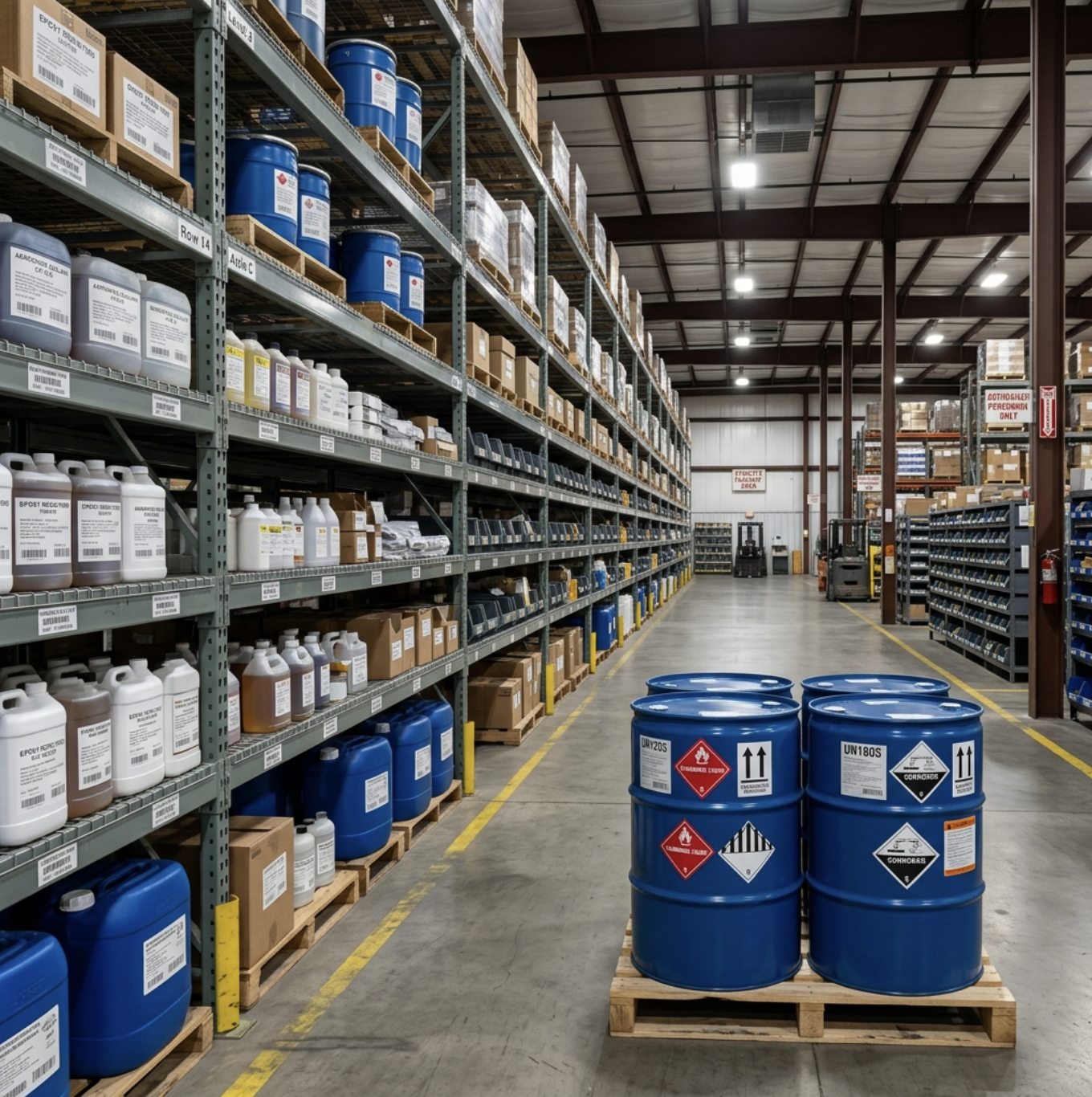
Aerospace and defense procurement leaders operate where technical precision, program timelines, and regulatory accountability converge. The materials you buy, including consumables, coatings, chemicals, fasteners, adhesives, sealants, and lubricants, must meet exact specifications while moving through a logistics chain that tolerates no errors. This guide is written for buyers, planners, and supply chain managers who keep aircraft programs moving and audit findings at bay.
The stakes are high: mission readiness, contract performance, audit exposure, and the real cost of downtime. The right sourcing decisions upstream prevent crises downstream by ensuring the correct, certified material arrives intact and on time. SkyGeek is an AS9120B-certified aerospace distributor with over 40 years of experience supporting commercial and defense operations with materials that meet MIL-SPEC, AMS, and OEM-approved requirements, backed by documentation management, lot control, and compliant packaging.
Key Takeaways
- Buy only materials that meet the required MIL-SPEC, AMS, and OEM-approved specifications with exact part numbers, packaging, and documentation. Use AS9120 certification to support process control without replacing adherence to the governing material spec.
- Require a certificate of conformance, applicable test reports or certificates of analysis, safety data sheets, export-control statements as needed, full batch and lot traceability, and shelf-life declarations with every shipment.
- Partner with an aerospace-focused distributor like SkyGeek to leverage documentation management, lot control, and compliant hazmat packaging and minimize audit and delivery risk.
Why Defense Logistics for Aerospace Materials Is Uniquely High-Stakes
Defense-related aerospace movements are more constrained than standard industrial shipping. Program schedules leave little slack, materials are often controlled or hazardous, and quality expectations are absolute. A late, damaged, or non-compliant item can idle an MRO line, delay a test window, or hold an aircraft on the ground.
Consider a depot-level maintenance check waiting on a sealant that must meet an AMS callout with a defined cure profile. If the product ships in the wrong packaging, exceeds its allowable heat exposure in transit, or arrives without a valid certificate of conformance, the aircraft stays grounded and the clock keeps running. Similar risks apply to fasteners with unique plating requirements or lubricants with precise shelf-life limits.
Core Compliance Frameworks That Shape Aerospace Material Purchases
Three pillars shape aerospace material buys: MIL-SPEC (military specifications issued by the U.S. Department of Defense), AMS (Aerospace Material Specifications developed and maintained by SAE International), and OEM requirements (manufacturer-specific callouts on engineering drawings and approved materials lists). Each dictates exactly what is acceptable to purchase and permissible alternates, if any.
These frameworks flow directly into the purchase order: precise part numbers, product forms and packaging, revision levels, and documentation requirements. The PO should call out the exact evidence required at receiving, including certificate of conformance, test reports or certificates of analysis, safety data sheets, export-control statements as needed, and shelf-life declarations.
AS9120, developed by the International Aerospace Quality Group and built on ISO 9001:2015, validates a distributor's quality management system and adds aerospace-specific requirements for risk management, traceability, supplier control, documentation management, and counterfeit parts prevention. It governs the management system, not detailed material or process specifications, and does not replace strict adherence to MIL-SPEC, AMS, or OEM requirements.
Before buying alternates or substitutes, confirm technical and contractual acceptability with engineering and quality. Using fully compliant materials reduces nonconformance risk in DoD, prime contractor, and internal audits.
From Specification to Loading Dock: Mapping the Defense Logistics Chain
The compliant logistics journey starts with requirement capture: clarifying end use, program, jurisdiction, and the authoritative specification. Sourcing selects qualified suppliers with the needed approvals and documentation capabilities, followed by a PO that mirrors the spec and sets clear evidence-of-conformance requirements.
Order processing should integrate compliance checks early. Screening for export controls, validating hazmat classifications, and confirming lot control and shelf-life windows are part of order acceptance, not last-minute shipment tasks. Aerospace sealants and adhesives with cure profiles may require temperature-controlled transport. Aviation chemicals classified as hazardous require UN-performance-rated containers, segregation, and regulated carrier declarations consistent with DOT CFR 49 and applicable modal regulations. Fasteners must maintain lot identity throughout transit.
Receiving inspection closes the loop by tying physical material back to the original specification and contract requirements. Inspectors verify documentation, batch and lot traceability, labeling, and condition, then record receipts in systems that maintain serial and lot history for full supply chain traceability.
Material-Specific Logistics Considerations
Flammable chemicals such as solvents and primers require UN-performance-rated containers, hazmat labels, and batch and lot markings on every unit and outer pack. Common pitfalls include incorrect hazmat classification, missing expiry data, and temperature abuse in transit. At receiving, verify batch and lot alignment across the CoC, CoA, and labels and confirm remaining shelf-life.
Adhesives and sealants with cure profiles are sensitive to freeze-thaw shock and require expedited routing when shelf-life is short. Mismatched batches and missing mix ratio data are the most frequent failure points. At receiving, verify batch and expiration dates and record storage conditions including any time out of refrigeration.
Fasteners and hardware conforming to NAS and MS standards must carry anti-corrosion packaging with spec, size, finish, and lot and heat numbers on all labels. Mixed lots, improper finish, and missing heat or lot traceability are common problems. Confirm lot and heat traceability and packaging compliance at receiving.
Ground support equipment and tools require crating with shock indicators, serialization, and asset tags. Transit damage and missing calibration records are the most common issues. Verify serial numbers against calibration records and confirm export paperwork where required.
Documentation, Traceability, and Quality Systems You Should Insist On
In defense programs, paperwork is as critical as the physical material. Batch and lot-level traceability is non-negotiable for coatings, aerospace sealants, lubricants, and chemicals. If a field issue arises, you need to isolate affected material quickly, prove containment, and demonstrate control.
Shelf-life and storage conditions are compliance items, not housekeeping. Defense Logistics Agency requirements specify that items must arrive with a minimum percentage of shelf-life remaining at the first destination, and buyers should align internal policies with applicable contract or program requirements.
Required Documentation for Every Shipment
- Certificate of conformance referencing the exact spec, revision, and PO; signed by an authorized representative.
- Applicable test reports or certificates of analysis tying measured results to the lot and batch and spec requirement.
- Safety data sheet with current revision; product identifiers must match labels and PO.
- Export-control statement as needed; for ITAR-controlled items, confirm whether a license or agreement is required prior to shipment.
- Full batch and lot traceability linking labels, CoC, CoA or test reports, and packing list.
- Shelf-life declaration with expiration date and remaining months on receipt, plus storage and handling requirements.
- Hazardous-material shipping papers and declarations when applicable, compliant with DOT CFR 49 and applicable modal regulations.
De-Risking Defense Logistics with Specialized Distributors Like SkyGeek
As an AS9120 and ISO 9001:2015-certified aerospace distributor, SkyGeek stocks MIL-SPEC, AMS, and OEM-approved materials with specification documentation available on product pages and certificates of conformance available on request. For defense procurement teams managing recurring supply needs, SkyGeek supports account pricing and volume fulfillment without membership fees or minimum order requirements.
Frequently Asked Questions
What compliance standards should govern aerospace material purchases?
Procurement should be governed by the exact MIL-SPEC, AMS, and OEM requirements specified on the drawing or contract, including revision levels. MIL-SPEC is issued by the U.S. Department of Defense. AMS is developed and maintained by SAE International. OEM requirements are manufacturer-specific callouts on drawings and approved materials lists. Use AS9120 certification to support traceability, documentation control, supplier oversight, and risk management without replacing adherence to the governing material specification.
Which documents should accompany aerospace material shipments?
Require a certificate of conformance, applicable test reports or certificates of analysis, safety data sheets, and export-control statements as needed, plus full batch and lot traceability. Insist on clear shelf-life and storage conditions. Hazardous materials shipments must include compliant shipping papers consistent with DOT CFR 49 and applicable modal regulations.
How does partnering with a specialized distributor reduce defense logistics risk?
Aerospace-focused distributors stock MIL-SPEC, AMS, and OEM-approved materials and manage documentation, lot control, compliant hazmat packaging, and export screening as part of their core process, helping ensure certified materials arrive intact and on time and reducing audit exposure for defense programs.
What is the difference between MIL-SPEC, AMS, and OEM requirements?
MIL-SPEC is issued by the U.S. Department of Defense and defines requirements for defense applications. AMS is maintained by SAE International and covers materials, processes, and testing across commercial and military aerospace. OEM requirements are manufacturer-specific callouts on drawings that may reference MIL-SPEC or AMS standards or add further requirements. All three can appear on a single drawing and must each be met independently.
What export-control obligations apply to aerospace material purchases?
ITAR, administered by the U.S. Department of State, covers defense articles, services, and technical data on the United States Munitions List. EAR, administered by the U.S. Department of Commerce, governs dual-use items on the Commerce Control List. Buyers should screen orders against applicable control lists and denied-party databases, confirm licensing requirements before shipment, and require export-control statements from suppliers when controlled materials are involved.
Follow Skygeek