
Reducing Stockouts and Downtime with Aerospace VMI Programs
Jun 25th 2026
Aerospace downtime, stockouts, and why VMI matters now.
An aircraft returns from a routine hop and heads straight into an AOG hold because a low-cost consumable was not on the shelf. An O-ring, a touch-up coating, a sealant cartridge. Mechanics are ready, tooling is booked, the gate is occupied, yet the airplane waits. In both airline and government fleets, that single missing item ripples into missed sorties, delayed schedules, and stranded assets at costs that quickly outstrip the price of the part itself.
Across airlines, MROs, flight schools, and government agencies, stockouts of critical parts and consumables are a leading driver of unplanned downtime. Traditional manual planning and reactive buying struggle with the volatile demand patterns of modern aviation, variable lead times, and stringent documentation and regulatory requirements. As fleets diversify and maintenance windows tighten, even well-run storerooms can find themselves chasing shortages or carrying excess inventory that ties up working capital.
Vendor managed inventory (VMI) offers a proven way to stabilize availability. By shifting day-to-day inventory management to an aviation-savvy supplier and improving data visibility and replenishment discipline, VMI reduces stockouts and keeps materials at the point of use. In this guide, you will learn how aerospace VMI works, the measurable benefits it delivers, and the common implementation challenges to anticipate. With over 40 years serving the aviation industry, SkyGeek brings an aviation-specific perspective grounded in line maintenance realities, back-shop needs, and an e-commerce logistics engine built for fast, compliant fulfillment.
Key Takeaways
Below are the central points to help you evaluate aerospace VMI for your operation.
- Aerospace VMI works by shifting day-to-day inventory management to the supplier, who ingests near-real-time consumption and stock data, applies predictive analytics to forecast demand, triggers automated replenishment with safety stock and lead-time buffers, and pre-positions parts via forward stocking locations and shop-floor control systems to keep materials at the point of use.
- VMI in aerospace reduces stockouts and AOG downtime while lowering total cost of ownership and excess inventory, freeing working capital, boosting shop-floor productivity, and strengthening compliance and supplier collaboration across airlines, MROs, flight schools, and government fleets.
- Address IT integration and master data quality, resistance to change and control concerns, single-supplier risk, and regulatory requirements by setting clear data-sharing agreements, KPIs, and governance, validating AS9100D/ITAR/DFARS compliance, and executing a phased rollout with an experienced aviation-savvy partner.
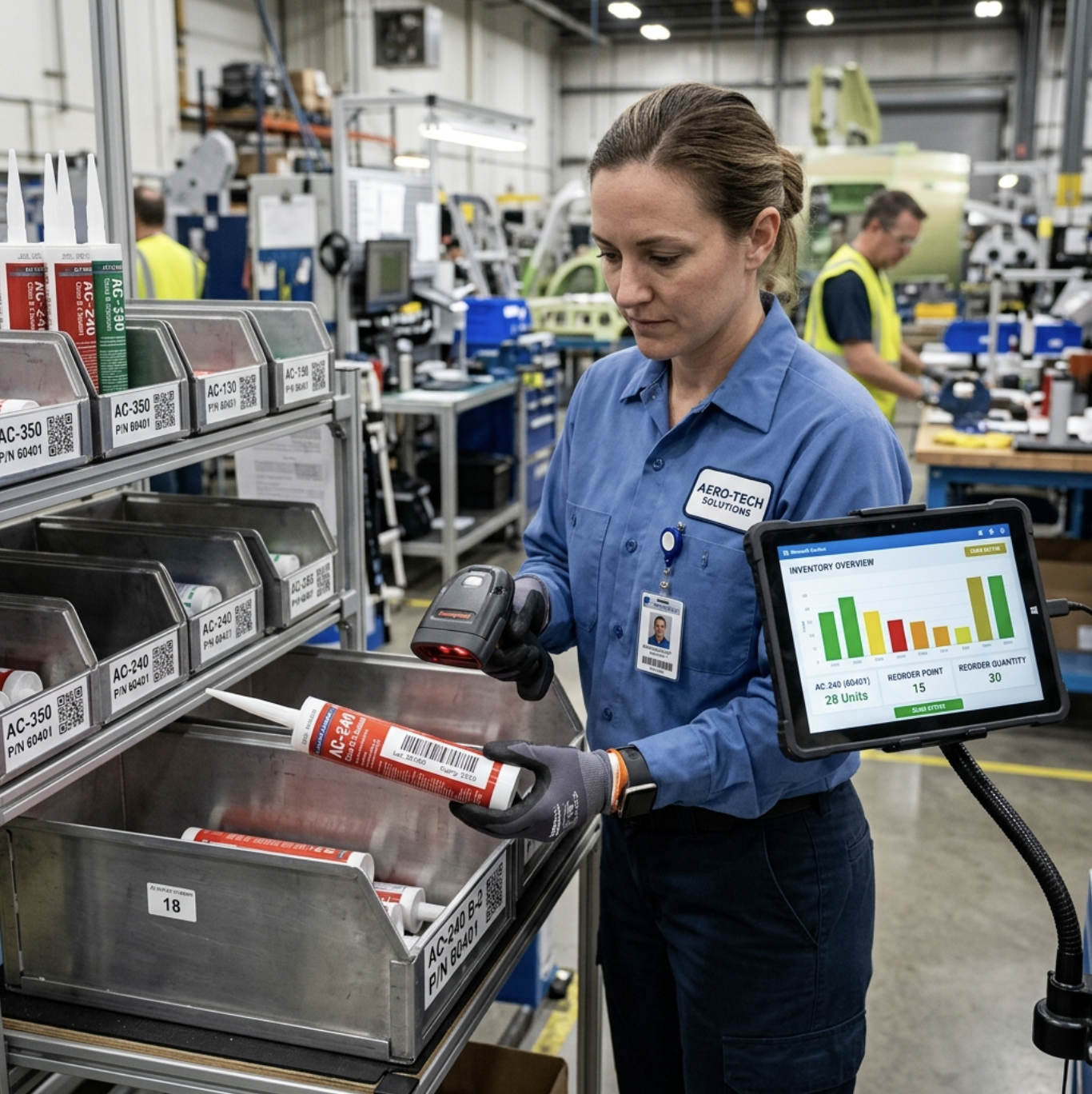
What Is an Aerospace Vendor Managed Inventory (VMI) Program?
In aerospace, Vendor Managed Inventory (VMI) is a collaborative model where a qualified supplier assumes responsibility for the day-to-day planning and replenishment of defined parts and consumables. The customer shares near-real-time usage and on-hand data. The supplier monitors that data, forecasts demand, and executes replenishment to agreed service levels, stocking locations, and compliance standards.
This differs from traditional min/max or periodic review systems common in hangars and production lines, where internal buyers reorder after counts or when bins look light. VMI replaces guesswork and lagging signals with continuous data, proactive planning, and supplier accountability for availability and accuracy.
Well-designed aerospace VMI supports Just-in-Time (JIT) principles, keeping materials close to the point of use without compromising airworthiness or regulatory control. Traceability, shelf-life management, certifications, and export control compliance are embedded in the process so technicians get the right, compliant item at the right time.
VMI is effective across MRO operations, production facilities, and aftermarket support environments. Enablers include forward stocking locations (FSL) to shorten effective lead times and shop-floor control systems that manage point-of-use bins, kitting stations, and electronic Kanban for controlled, auditable movement of materials.
How VMI Works in the Aerospace Industry: From Data to Delivery
Aerospace VMI starts with data. Consumption scans, bin-level sensors, point-of-use withdrawals, and cycle counts flow from your facilities to the supplier via secure integrations or scheduled uploads. The data includes on-hand balances, issues and returns, and key attributes like shelf life and certifications.
The supplier applies predictive analytics to historical usage and near-term signals including scheduled checks, induction plans, seasonality, and reliability alerts to forecast demand for critical parts and consumables. Items like fasteners, aerospace sealants, tapes, filters, and PPE often show repeatable patterns that benefit from algorithmic tuning combined with planner oversight.
Automated replenishment triggers convert forecasts into action. Reorder points incorporate safety stock and lead-time buffers, factoring supplier lead times, transit variability, and approval workflows. When a bin drops to its trigger, a replenishment order is generated without waiting for manual buying cycles.
Materials are staged to arrive where work happens. Forward stocking locations reduce effective lead time for multi-site or global fleets, while shop-floor control systems direct replenishment into line-side bins, kitting carts, and maintenance cells. Certificates of conformance, batch and lot traceability, and environmental controls ride along digitally and physically.
Consider a high-usage sealant cartridge: technicians scan withdrawals, the system decrements stock, and analytics see a rising usage trend ahead of a heavy check. The VMI engine advances orders to an FSL to avoid a dip below safety stock, and fresh lots are kitted to the bay before the weekend. SkyGeek's e-commerce and logistics backbone supports this flow with reliable item master data, broad catalog availability, and fast, trackable replenishment.
How Aerospace VMI Programs Reduce Stockouts and Downtime
Continuous Monitoring Prevents Zero-on-Hand Conditions
Because inventory is observed in near real time and reorder points are engineered with safety stock, the system reacts before a shortage occurs. This eliminates the scramble that drives AOG holds and line stoppages before they start.
Pre-Positioning Turns Long Lead Times into Short Walks
By stocking at forward locations and point-of-use bins, VMI compresses the time between need and availability. The effective lead time is measured in minutes from bin to bay, not days from purchase order to receiving dock.
Both Planned and Unplanned Maintenance Benefit
Heavy checks, overnight line maintenance, component swaps, and unscheduled findings all see higher schedule reliability when critical consumables and hardware are always at hand. Turnaround times improve, and technicians stay focused on work rather than searching or waiting.
Smarter Safety-Stock Strategies Protect Against Spikes
Visibility into demand patterns across fleets and sites lets the supplier hold risk in the network, often on the supplier's balance sheet, so operators avoid tying up cash. A missing fastener assortment or expired aviation chemical no longer holds an aircraft, and on-time performance improves.
Core Benefits of VMI in Aerospace Operations
Beyond fewer stockouts, aerospace VMI drives strategic and financial gains that matter to airlines, MROs, flight schools, and government fleets. The model lowers total cost of ownership (TCO), frees working capital, reduces administrative workload, and raises shop-floor productivity.
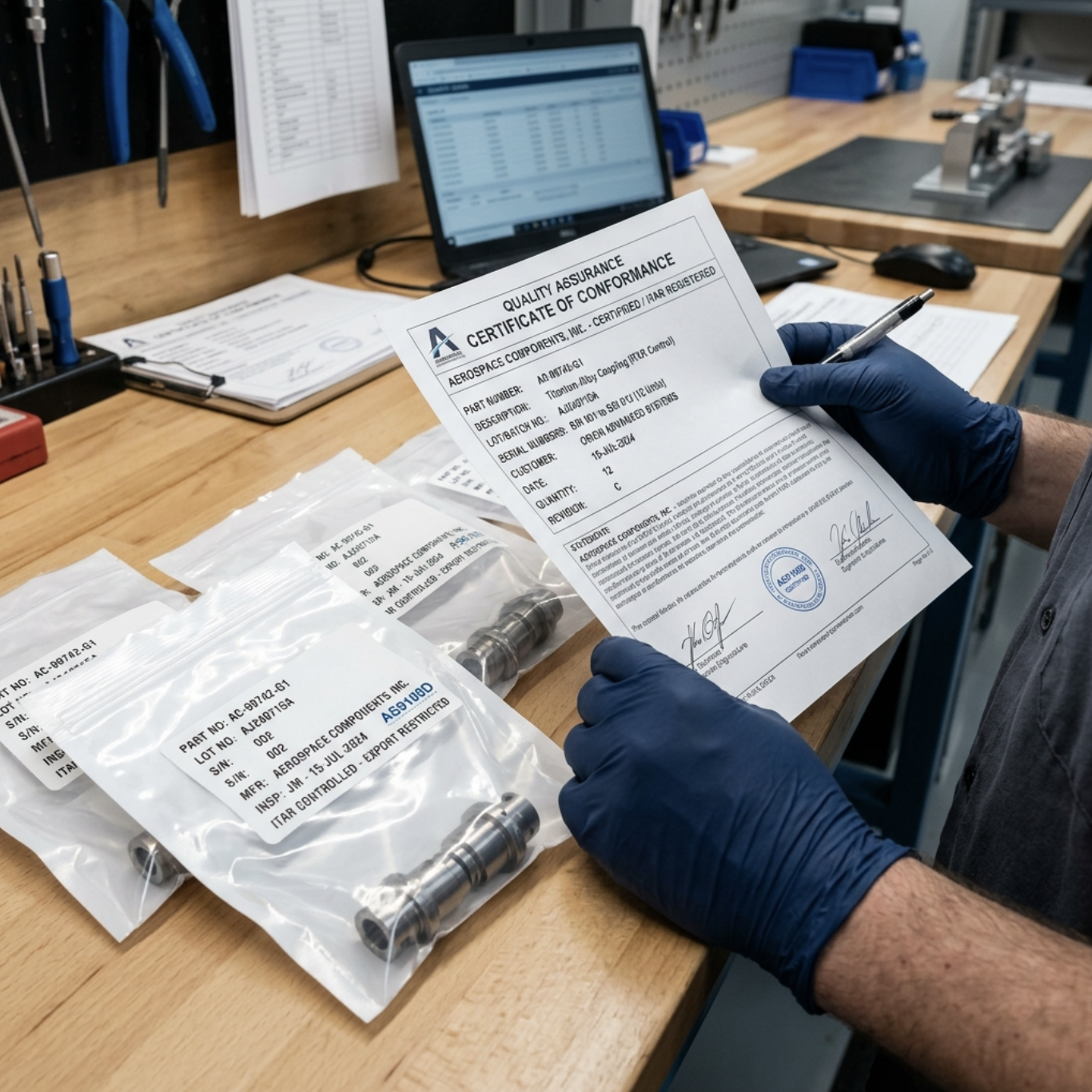
Because the supplier manages replenishment and often positions inventory closer to use, your teams place fewer spot-buys, handle fewer emergency shipments, and spend less time counting or expediting. At the same time, visibility and documented controls strengthen quality and regulatory compliance, including AS9100D, ITAR, and DFARS where applicable.
Technicians benefit most visibly through stocked bins, clean kits, current certs, and fewer interruptions. Supervisors spend less time firefighting and more time improving processes. Finance sees lower excess and obsolete inventory while service levels rise.
Challenges of VMI Implementation in Aerospace and How to Manage Them
Implementing VMI introduces change. The most common hurdles involve IT integration, master data quality, and aligning processes across maintenance, supply chain, quality, and finance.
Organizations may worry about loss of control or over-reliance on a single supplier. Technicians and buyers accustomed to manual ordering may resist new workflows, especially if early data is noisy or bins are rearranged.
Trust is built through clear data-sharing agreements, defined KPIs, and a governance cadence that includes joint S&OP-style reviews and site walks. Transparency on forecasts, service levels, and root causes of misses turns the relationship into a continuous-improvement loop.
Compliance and export controls must be explicit. Ensure the VMI partner upholds AS9100D quality practices and meets ITAR/DFARS requirements for covered items. Documentation, shelf-life tracking, and segregation of controlled materials should be designed into the process and system flows.
All of these challenges are manageable with planning and an experienced, aviation-savvy vendor. Start with a focused pilot, refine data and workflows, then scale once service levels stabilize and stakeholders see the benefits.
Common VMI Implementation Challenges
- IT and data readiness: Clean item masters, units of measure, and locations; secure integration for usage and on-hand signals.
- Process alignment: Define who scans, who counts, and how exceptions such as scrap, quarantine, and returns are handled.
- Change management: Communicate the why, train to new roles, and phase changes to minimize disruption.
- Governance and KPIs: Set fill rate, stockout, shelf-life, and turnaround metrics and run regular joint reviews.
- Supplier risk and compliance: Validate AS9100D certification, and for controlled items, ensure ITAR/DFARS adherence and clear handling procedures.
Is Aerospace VMI Right for Your Operation?
If you face recurring stockouts, frequent expedites, or high carrying costs, especially across multiple sites, VMI is likely a strong fit. Operations with variable workloads, compressed maintenance windows, or compliance-intensive consumables see outsized gains.
VMI is not just for large OEMs. Midsize MROs, flight schools, and government fleets can start with targeted categories and scale as confidence grows. The key is selecting an aviation-focused partner who can absorb the planning load and uphold quality and export controls.
Use your own data to evaluate ROI. Tally AOG or line-delay incidents linked to missing consumables, quantify expedite spend, and estimate time technicians spend searching or waiting. Compare that cost to the expected improvement in fill rate and turnaround time under VMI.
SkyGeek can help you assess options and design a right-sized program, from data integration and bin planning to compliant sourcing and forward stocking, so you can stabilize availability and keep aircraft moving. Browse aerospace MRO consumables to see the breadth of products that can be incorporated into a VMI program.
|
Criteria |
Traditional Self-Managed Inventory |
Vendor Managed Inventory (VMI) |
|
Stockout risk |
Reactive, higher variability |
Proactive, monitored continuously |
|
Working capital |
Higher excess and obsolescence |
Optimized inventory, supplier-held where feasible |
|
Effective lead time |
Days or weeks from PO to dock |
Minutes or hours from POU bin or FSL |
|
Data visibility |
Counts and spreadsheets |
Integrated usage, on-hand, and forecast data |
|
Compliance burden |
Manual cert handling |
Built-in certs, lot and serial control, shelf-life tracking |
|
Best fit |
Stable, simple, single-site ops |
Multi-site, variable demand, uptime-critical ops |
Frequently Asked Questions
How does a VMI program work in the aerospace industry?
Aerospace VMI shifts daily planning and replenishment to a qualified supplier that ingests near-real-time usage and on-hand data, applies predictive analytics to forecast demand, and triggers automated orders with safety stock and lead-time buffers. Inventory is pre-positioned at forward stocking locations and point-of-use bins, with documentation and compliance controls built in.
What are the key benefits of VMI for aerospace operations?
VMI reduces stockouts and AOG downtime, lowers total cost of ownership, frees working capital, and boosts shop-floor productivity. It also strengthens compliance including AS9100D, ITAR, and DFARS as applicable, and improves supplier collaboration through shared KPIs and governance.
What challenges arise when implementing aerospace VMI, and how should they be managed?
Common hurdles include IT integration, master data quality, process alignment, change resistance, and supplier dependency concerns. Manage them with clear data-sharing agreements, defined KPIs and governance, validated quality and export-control credentials, and a phased rollout starting with a focused pilot.
What types of aerospace consumables are typically managed under a VMI program?
VMI is commonly applied to high-turnover consumables such as fasteners, sealants, adhesives, lubricants, coatings, tapes, filters, and cleaning chemicals. These are the categories where stockouts most frequently cause maintenance delays and AOG situations.
How do small or midsize MRO operations benefit from VMI?
Midsize and smaller operations benefit by eliminating the internal planning burden on lean procurement teams. A well-structured VMI pilot focused on a single product category or maintenance bay can deliver measurable fill rate improvements and reduced expedite spend without requiring a large upfront IT investment.
Follow Skygeek