
Aerospace Adhesives Comparison: Epoxy vs Cyanoacrylate vs Polyurethane vs Silicone
Apr 2nd 2025
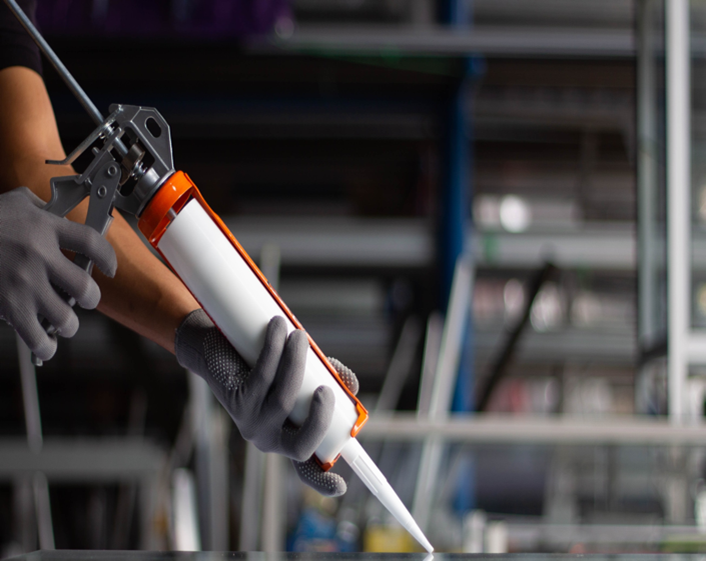
Comparing Aerospace Adhesives: The SkyGeek Guide
Adhesives play a critical role in the aerospace industry. They're responsible for bonding various components of aircraft, spacecraft and satellites together, ensuring these high-performance machines can withstand the extreme conditions they're exposed to during the flight. This SkyGeek guide (with FAQ) to common aviation industry adhesives is based on our long experience serving the needs of individuals, aerospace companies, commercial airlines, military installations, government customers and fixed-base operations.
Aerospace adhesives must provide strong bonds, resist extreme temperatures and be lightweight to minimize the impact on overall performance. Additionally, they must adhere to strict industry standards for safety and reliability. That means adhesives in aerospace aren't just glue - they're critical components of engineering precision and safety. Whether you're assembling fuselage components or just patching a panel, your adhesive choice matters.
Over our 40-plus years of operations, we have developed expertise in the advantages and disadvantages of commonly used aerospace adhesives. Use this guide to learn about four common types of aerospace adhesives: epoxy, cyanoacrylate, polyurethane and silicone. We'll also help you navigate which adhesive is best suited for your project, whether you're bonding composite wing panels or mounting an interior panel.
About Epoxy Adhesive
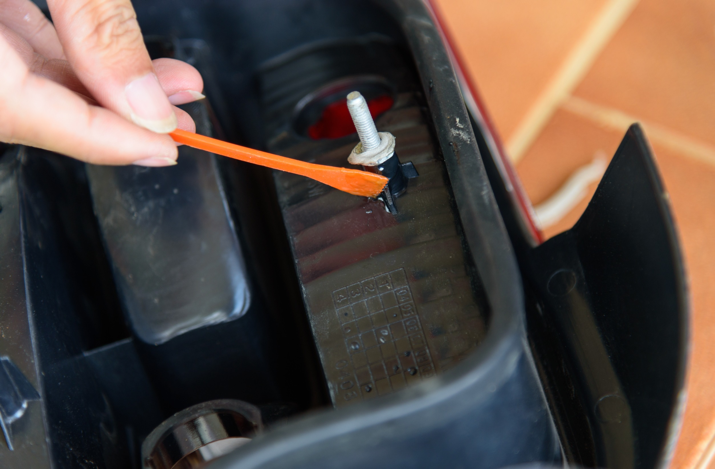
Epoxy adhesives are one of the more popular choices for aerospace applications due to their exceptional mechanical strength and resistance to harsh environmental conditions. Find more than 200 kinds of epoxy adhesives at SkyGeek, ranging from 50-gram E-Z packs of Henkel Hysol red epoxy adhesive to gallon kits of epoxy paste adhesive by Solvay. These adhesives are often used in primary and secondary structural bonding, offering performance that meets rigorous aerospace requirements for safety in the skies.
Advantages of Epoxy Adhesives
- High bond strength, making them ideal for structural bonding applications.
- Excellent resistance to chemicals, heat and moisture.
- Wide range of formulations, allowing for customization to suit specific application requirements.
- Generally low shrinkage during curing, resulting in minimal stress on bonded components.
- Outstanding durability over time, even under load-bearing conditions.
Disadvantages of Epoxy Adhesives
- Longer curing times compared to other adhesive types
- It might require heat or pressure to cure effectively
- Can become brittle at very low temperatures
- Some types may require careful surface preparation for optimal adhesion
About Cyanoacrylate Adhesives
Cyanoacrylate adhesives, often referred to as "super glues," provide quick bonding times and strong adhesion for a variety of materials. Cyanoacrylate adhesives from SkyGeek include inexpensive 1-oz. bottles by Permabond and cyanoacrylate gel adhesives in 7-oz. tubes by Henkel's Loctite® brand. They're perfect for small-scale applications and quick fixes where speed is more important than long-term load-bearing performance.
Advantages of Cyanoacrylate Adhesives
- Rapid curing, usually in seconds to minutes.
- Excellent bond strength for small, non-structural components.
- Can bond a wide variety of materials, including plastics, metals and composites.
- Easy to apply, often without the need for complicated equipment.
- Ideal for minor repairs, field fixes, or temporary solutions during maintenance.
Disadvantages of Cyanoacrylate Adhesives
- Limited thermal and chemical resistance compared to other aerospace adhesives.
- Can become brittle over time, reducing long-term bond strength.
- Not suitable for large, structural bonding applications.
- May produce fumes, so must be used with proper ventilation.
Polyurethane Adhesives
Polyurethane gets its name from its definition: a class of organic chemical polymers joined by urethane links. Polyurethane adhesives offer a combination of flexibility and strength, making them suitable for a range of aerospace applications. They're often used where vibration, movement or thermal expansion is expected.
Advantages of Polyurethane Adhesives
- Excellent flexibility, allowing for the absorption of stress and vibrations.
- Good adhesion to a variety of materials, including plastics, metals and composites.
- Can be formulated to meet specific application requirements.
- Generally resistant to moisture, chemicals and abrasion.
- Ideal for interior panel bonding and non-structural applications.
Disadvantages of Polyurethane Adhesives
- Can require a primer for optimal adhesion on certain surfaces.
- Can be sensitive to UV light, which may cause degradation over time.
- Lower temperature resistance compared to epoxy adhesives.
- Not always suitable for exterior or high-heat applications.
About Silicone Adhesives
Rubber-like silicone is a polymer made of siloxane. Although it acts like rubber, it's considered a chemical middle ground between rubber and plastic. It's also chemically stable, so silicone implants are popular plastic surgery choices.
Silicone adhesives are known for their excellent temperature resistance and flexibility, making them ideal for applications where thermal expansion and contraction are concerns. Silicone adhesives shine in sealing applications, gasketing, and anywhere temperature extremes are the norm.
Advantages of Silicone Adhesives
- Strong temperature resistance, capable of withstanding extreme fluctuations.
- Excellent flexibility, allowing for movement between bonded components.
- Good resistance to moisture, chemicals and UV light.
- Can be formulated as one-part or two-part systems, providing options for curing times and application methods.
- Non-corrosive formulas available for electronics or sensitive surfaces.
Disadvantages of Silicone Adhesives
- Generally lower bond strength compared to epoxy, cyanoacrylate and polyurethane adhesives.
- Longer cure times, particularly for one-part systems.
- Might require a primer or surface treatment for optimal adhesion on certain materials.
Aerospace adhesives play a vital role in modern aircraft, spacecraft and satellite manufacturing and maintenance. Understanding the characteristics, advantages and disadvantages of these adhesives can help engineers choose the right adhesive for the job. When in doubt, consult SkyGeek - because sticking things together is kind of our thing.
Aerospace Adhesives FAQ
What types of adhesives are used in aerospace applications?
Aerospace adhesives include two-part epoxy structural adhesives for high-strength bonding, cyanoacrylate (instant) adhesives for quick-set non-structural applications, polyurethane adhesives for flexible bonding with impact resistance, and silicone adhesives for high-temperature and environmental sealing. Each type has specific performance characteristics that determine suitability for aviation applications.
Shop aerospace adhesives at SkyGeek
What is the strongest adhesive for aerospace structural bonding?
Two-part epoxy structural adhesives provide the highest bond strength for aerospace structural applications including composite repair, metal-to-metal bonding, and potting of inserts in honeycomb structures. High-performance epoxy systems can achieve lap shear strengths exceeding 3,000 psi and are formulated to resist peel, fatigue, and thermal cycling.
When should cyanoacrylate adhesive be used in aircraft maintenance?
Cyanoacrylate adhesives are appropriate for non-structural, fast-set applications such as bonding small trim pieces, securing wire labels, or temporary fixturing during assembly. They should not be used in structural applications, fuel-wetted environments, or anywhere subject to significant vibration or peel loads.
What is the difference between polyurethane and epoxy adhesive for aircraft?
Epoxy adhesives provide higher shear strength and chemical resistance, making them suitable for structural bonding and repair. Polyurethane adhesives offer greater flexibility and impact resistance, making them preferable where differential thermal expansion or vibration absorption is required, such as windshield bonding or flexible panel attachments.
Do aerospace adhesives need to meet a specification?
Yes. Adhesives used in certificated aircraft maintenance must conform to specifications such as MIL-A-8623 for epoxy resin adhesives, AMS 3920 for film adhesives, or OEM-specific callouts in the maintenance or repair manual. Procurement teams must verify the specification requirement before sourcing.
View MIL-SPEC materials at SkyGeek
How should aerospace adhesives be stored and handled?
Most aerospace adhesives have defined shelf lives and storage temperature requirements specified in the product data sheet. Two-part adhesives must be kept in sealed containers to prevent moisture contamination and premature curing. Always check the expiration date before use and discard material that has exceeded its stated shelf life.
Follow Skygeek